Does Wildfire Increase Sedimentation and Harm Aquatic Ecosystems?

Most people assume that wildfire harms aquatic ecosystems and fisheries. I recall once being on a field trip to look at a proposed timber thinning project with a Forest Service District Ranger. Among the other participants were county commissioners, timber company representatives, and, members of several conservation groups. When I asked the District Ranger for his justification for the timber sale, he said logging would reduce fuels and sedimentation after a major fire, thereby preserving the watershed and fish populations.
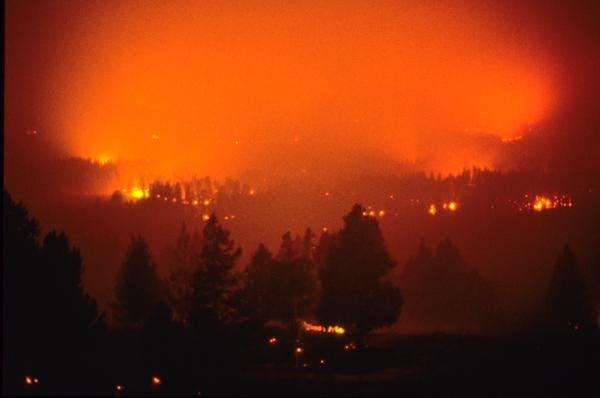
No one objected to this rationale-not even the FS hydrologist who stood meekly by without saying a word.
I explained that the new logging roads needed for the timber sale would likely create more sedimentation and harm to fisheries than any wildfire. The District Ranger scoffed at my statement and turned to the hydrologist and said, “Roy, is that true? Do logging roads create more sedimentation than wildfires?”
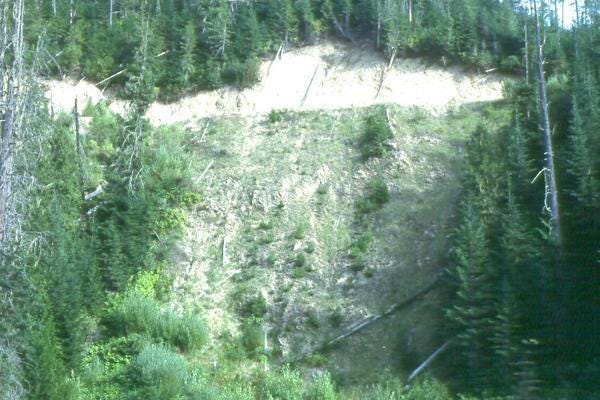
Only then did the hydrologist speak up. He said, “As a matter of fact, logging roads are a chronic source of sedimentation and often increase erosion and sustained sedimentation flows.”
It’s true that after a major wildfire, sedimentation often increases. Still, the difference between a wildfire and a logging operation is that roads continuously erode and shred sediment. In contrast, revegetation after a wildfire quickly returns a watershed to its pre-fire condition.
The common hypothesis is that sedimentation increases after wildfire, harming fish, aquatic insects, and other stream life. But such assumptions are being challenged by new research.
This narrative misleadingly portrays mixed-intensity forest fires as harmful to fish. It does so by selectively focusing on some short-term impacts while ignoring both the habitat benefits from intense fires and the harms from logging done under fire-related justifications. There is no doubt that under some conditions, especially immediately after a high-severity blaze, aquatic ecosystems can suffer temporary degradation.
Increasingly, we are beginning to understand that wildfires are a crucial positive influence on aquatic ecosystems.
Most fish populations recover rapidly after a significant fire.
Wildfire often improves conditions for native fish.
The added wood that enters a stream is an episodic but critical habitat component for aquatic life. These findings make sense, as native fish have evolved alongside mixed and high-severity fires for thousands of years.
Mixed-to high-severity blazes are not aberrations but have periodically charred most western plant communities.
A new paper, “Following megafires, fishes thrive, and amphibians persist even in severely burned watersheds,” adds to the cumulative evidence that high-severity fires often improve habitat for fish and other aquatic life.
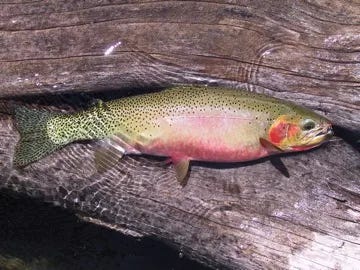
The researchers found: “Greater total taxa, total fish, and adult trout densities were associated with streams draining more severely burned watersheds.” They conclude: “Our findings indicate fishes thrive, and amphibians and crayfish persist despite experiencing high-severity megafires in the western Cascades of Oregon.”
Some of the evidence for this co-evolution of wildfire and native fish is the existence of high-quality aquatic ecosystems now found in places where major wildfires occurred, such as Yellowstone National Park, the 1910 Big Burn, as well as the North Fork of the Flathead by Glacier Park, the Bob Marshall Wilderness, and other reference watersheds around the West.
WILDFIRE INFLUENCES ON FISH
Fire’s effects on fish can generally be broken down into three categories: short-term, delayed response, and long-term. The short-term impacts would usually be considered neutral or negative, while the long-term effects, overall, would be regarded as a positive influence.
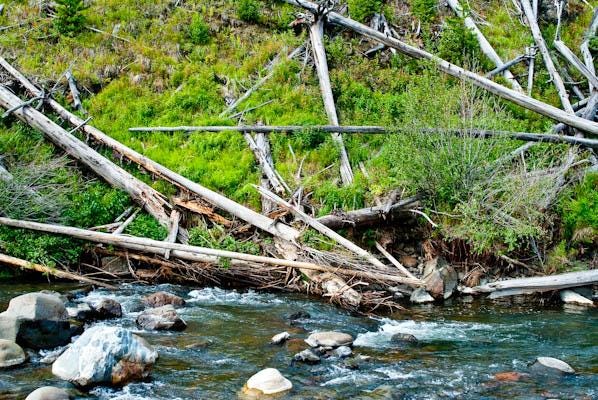
Mixed- to high-severity blazes create improved aquatic habitat by providing down wood. To be clear, high-severity blazes are the primary source of snags and down wood in aquatic ecosystems of the West. The more intense the fire, the more wood that enters waterways. This wood provides structural diversity, slows the current, reduces erosion, provides habitat for aquatic insects, and hiding cover for fish.
Another benefit of large fires is the smoke they produce. Smoke from wildfire can cool waterways, improving the survival of salmon, trout, and other aquatic life that require colder water.When a watershed burns, the loss of plant cover and subsequent changes in sediment flow, changes in water temperature, changes in debris flow, and the release of nutrients into the system often alter streams.
Nevertheless, since drought is almost a prerequisite for large blazes, the actual negative impacts on fish are low water flows as a consequence of drought. Low precipitation results in greater dewatering of tributary streams for irrigation, causing a decline in spawning success and recruitment. Reduction in the amount of water leads to higher temperatures and greater concentrations of pollutants, negatively affecting fish and aquatic systems.
Climate change is a more significant threat to western aquatic ecosystems since it affects the entire region, not just one or two headwater drainages.
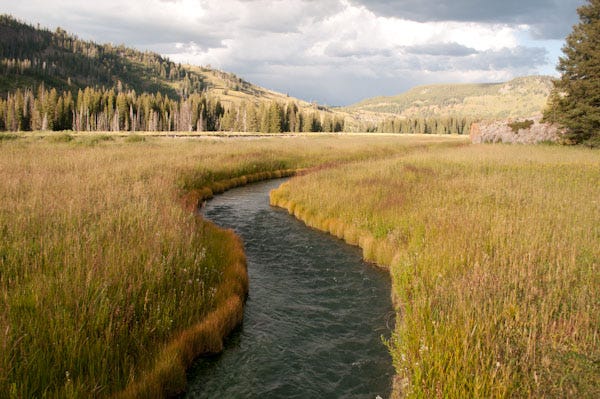
In most of the West, small headwater streams are typically quite cold due to high elevation and snowmelt as a water source. The water temperature in such streams remains well within the tolerance of trout and other aquatic insects, even if streamside vegetation is removed. Rising temperatures may be a positive benefit (if you think more fish is “good”), increasing biological activity, growth rates, and food supplies. But again, like any generalization, there are exceptions.
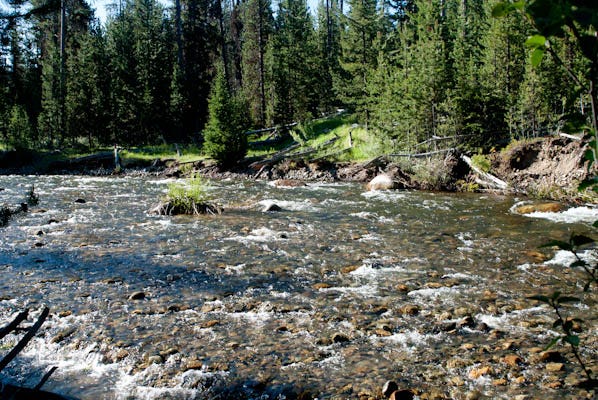
Fish recovery after a wildfire is relatively rapid. A study of the John Day River in Oregon after major high-severity wildfires concluded that “within four years distribution of juvenile steelhead (anadromous rainbow trout Oncorhynchus mykiss) and resident rainbow trout was similar to that before the fire.”
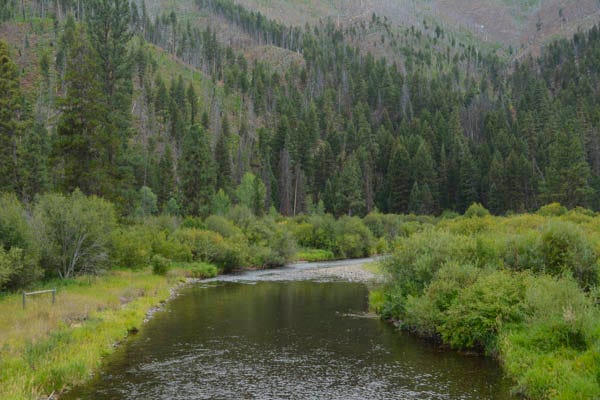
A surprising finding after a major wildfire burned the East Fork of the Bitterroot River in Montana is that native cutthroat trout increased while non-native trout declined. At least in some cases, a wildfire may promote native fish recovery.
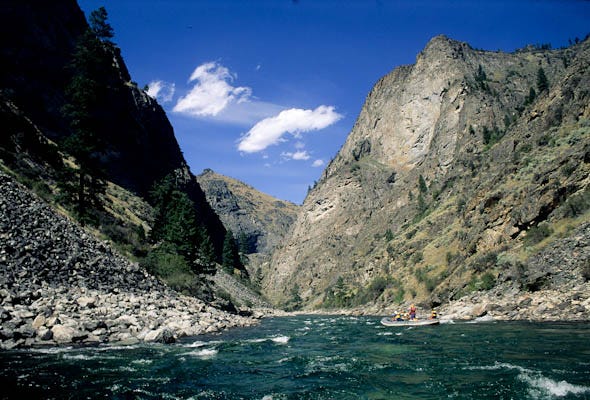
High-severity fire increased the biomass of some aquatic insects in the River of No Return Wilderness. This “fire pulse” of increased productivity led to an increase in insect-eating birds and bats.
However, some lower-elevation waters may rise above lethal temperatures for fish if enough streamside vegetation is killed or destroyed by fire.
WILDFIRE, STREAM CHANNEL ALTERNATIONS, AND SEDIMENTATION
Fire-induced vegetation loss can also affect stream flow and timing. For example, Snowmelt may come earlier and proceed more rapidly in burned watersheds. Plus, the loss of trees and shrubs can reduce the amount of moisture transpired by plants, increasing soil moisture and leading to higher stream flows. These higher flows, especially in steeper first-order headwater streams, can mobilize sediments and debris, increasing incision and downcutting, thus affecting channel morphology.
Sediment flows record climatic changes in fire frequency and size with warmer periods like the Medieval Warm Spell when many large fires are recorded in sediment profiles; cooler periods had far fewer large blazes.
Nevertheless, how higher flow affects individual streams has much to do with the stream size, steepness, and bedrock characteristics. For example, the upper headwaters of Cache Creek in Yellowstone National Park is a steep, short tributary of the Lamar River and suffered significant sediment flows after the 1988 Yellowstone Fires.
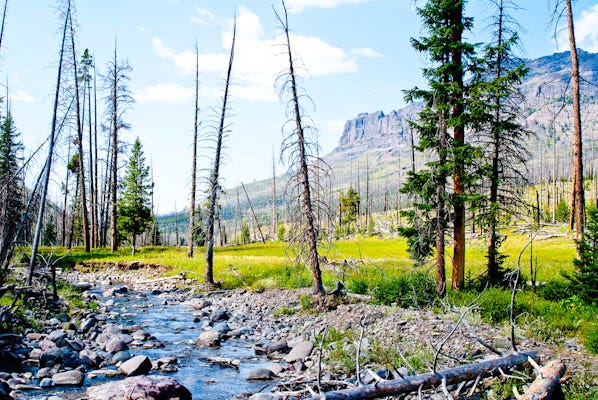
More than 80% of the Cache Creek drainage burned in the 1988 Yellowstone Park blazes. The watershed is composed of loosely consolidated volcanic debris. After the fire, subsequent heavy summer thunderstorms contributed to major changes in stream channel combined with significant sediment flow that initially led to a decline in aquatic insects and fish.
This minor flow increase resulting from wildfire compares to the natural variation is much smaller than that results from a major flood that may change flows by as much as 161% over the long-term average. In other words, when you reach the level of a major river, the effects of a fire are minor compared to other natural events like floods or droughts.
One researcher involved in extensive studies of the aftermath of the 1988 Yellowstone fires concluded: “Current evidence suggests, however, that even in the case of extensive high-severity fires, local extirpation of fishes is patchy, and recolonization is rapid. Lasting detrimental effects on fish populations have been limited to areas where native populations have declined and become increasingly isolated because of anthropogenic activities.”
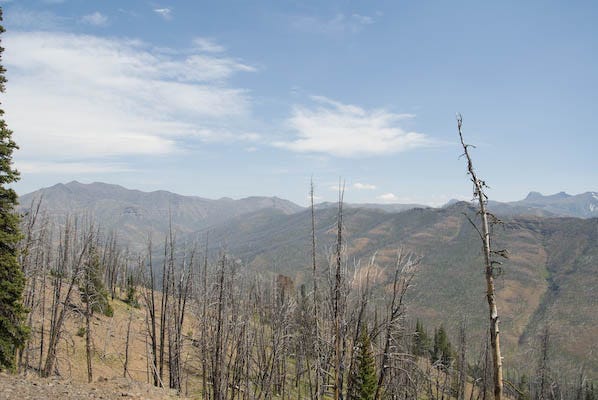
Wayne Minshall, now deceased, formerly at the Stream Ecology Center at Idaho State University in Pocatello, studied the effects of Yellowstone’s fires on stream systems. They found that burned watersheds in Cache Creek and other small tributaries of the Lamar River (where more than 50% of the area had been scotched) had more sheet erosion, gully formation, and soil mass movement compared to unburned control streams.
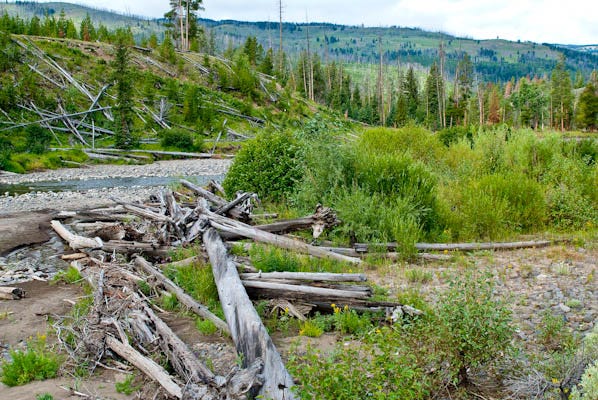
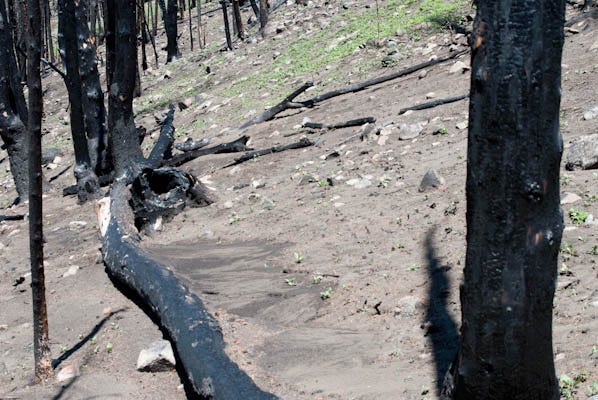
Though these channel alternations may initially be seen as unfavorable, they are, for the most part, temporary. The regrowth of vegetation stimulated by the increase in sunlight, water, nutrients, and fertilization from the fire’s ashes rapidly reduces erosion and sediment flow. Within a few years, the stream systems begin to stabilize.
Indeed, a recent study of wildfire effects on trout in the Rio Grande found that initially, there was some fish kill due to post-fire sediment loads, but stream conditions had stabilized within three years. Fish populations had returned to pre-fire conditions.
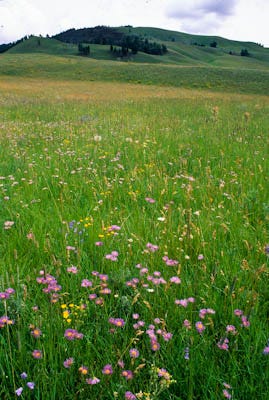
In a comparison of sediment flow in the Lamar River prior to the 1988 fires with post-fire conditions, Roy Ewing found that sediment transport initially increased but diminished by 1992 to less than pre-fire levels. Much of the decrease in sediment transport was due to storage behind fallen logs and other debris that had begun to trap gravel.
After the initial rush of fine sediments is reduced, stream flows stabilize the newly deposited gravel. They even may create an important new source for spawning habitat.
To build redds to protect and incubate eggs, spawning salmon look for well-oxygenated gravel beds in river shallows. The size of the gravel is critical. Spring Chinook tend to favor gravel ranging from 25-100 millimeters in diameter (think bullseye marbles to softballs), while Oregon Coast coho prefer finer gravels (10-50 mm).
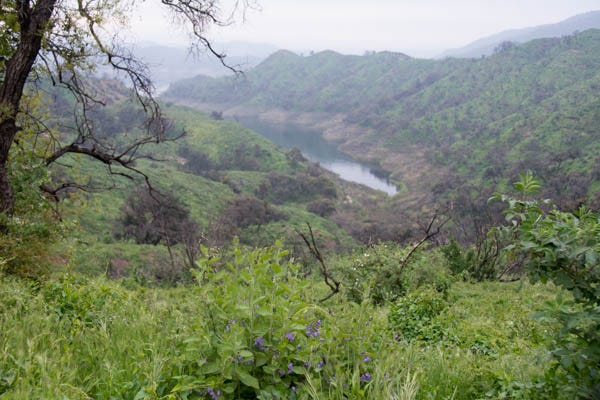
Because rivers carry gravel downstream over time, sprawling headwater creeks and rivers require regular gravel influxes. Wildfires are one of the episodic processes that provide this input.
WILDFIRE IS AN IMPORTANT SOURCE OF WOODY DEBRIS
Another generally positive benefit of fires is a large amount of woody debris—logs, branches, and other burnt materials that are carried or fall into rivers. These logs and other materials reduce water velocity contributing to greater channel stability over time, somewhat countering the effects of higher flows.
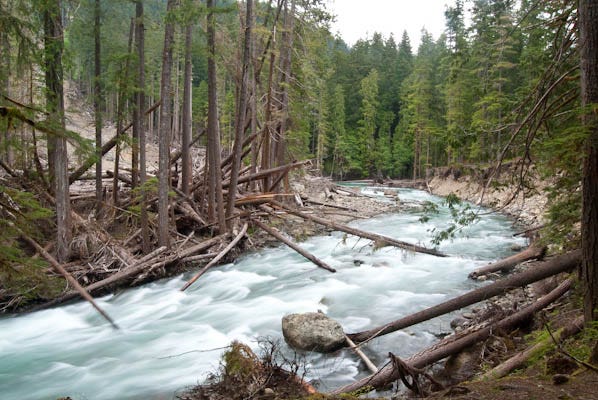
Researchers in Montana found that sizeable woody debris was critical to forming pools for bull trout. Still, in areas with logging, there was often a need for more logs in streams, affecting the habitat for bull trout. A study in Alaska found a similar increase in pool formation due to woody debris input.
The additional wood and logs also create cover and food resources for aquatic insects and fish. A comparison between clearcut forests and burned forests in Wyoming showed more than twice as much woody debris in streams in drainages that had burned compared to those in logged areas.
Furthermore, since even on the most intensely burned sites, there is an abundance of snags and logs that remain on site for decades, the fires continued to contribute fish habitat to streams for years after the burn. In a sense, episodic high-severity fires are a long-term source of woody debris to streams that may provide logs and wood for the next hundred years.
Wayne Minshall found that an average of 28 additional pieces of large woody debris per 50-m reach was recorded in third-order burned sites relative to only eight pieces gained in third-order reference streams in 1989, the first year following the 1988 Yellowstone wildfires.
WILDFIRE COMPARED TO LOGGING EFFECTS
The persistence of siltation from logging roads is fundamentally different from the intermittent pulses associated with forest fires. Aquatic ecosystems are adapted to and even benefit from occasional sediment pulse. But chronic sedimentation from logging road is new and creates significant problems.
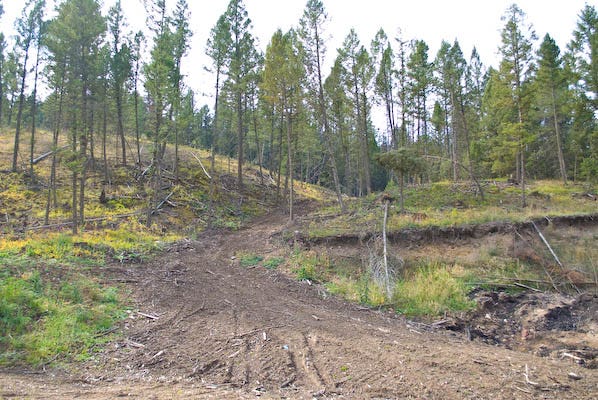
In many instances, post-fire logging can increase sediment, and logging roads are a source of chronic sedimentation. Fish can adapt to short-term sedimentation, such as after a wildfire, but continuous sedimentation from logging roads often harms aquatic ecosystems.
One difference between fires and logging activity, particularly “salvage logging,” is the repeated remobilization of sediments every time machinery and road construction occurs in a watershed. ( It should be noted that the FS “restoration” projects may occur over a 30 year period by recurring logging and livestock grazing). While a blaze may release an initial flush of sediment, within a few years, sediment flow tends to decline to pre-fire levels or even lower as the post-fire slopes revegetate and fallen woody debris begins to trap sediments both on the slopes and in the stream.
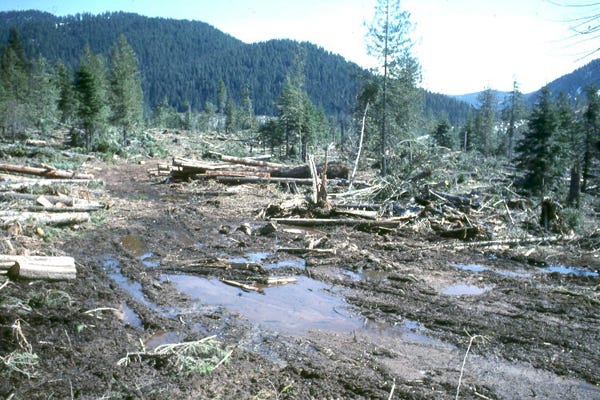
Logging, however, may repeatedly disturb slopes, releasing sediments for years or decades, depending on how long logging continues in the drainage. As a result, logging roads may contribute to 90% of the sedimentation. In addition, since most logging roads are not fully restored, including the restoration of slope lens and revegetation, they are a long-term sedimentation source. Another difference between fires and human activities is the structural component. While logging removes wood from the watershed. Over the long term, the input of fallen snags creates more fish habitat.
Prior to 1988, Montana State University entomologist George Roemhild, had sampled aquatic insects throughout the park. He resampled many of those sites in 1991 and 1992, some three and four years post-fire, and found no large changes in the number or diversity of stoneflies, mayflies, or caddis flies before and after the fires in the park as a whole.
So what was the effect on fish? As with Yellowstone’s 1988 blaze, fish in small headwater drainages like Cache Creek suffered some mortality from the fires. Again, temperatures were not to blame;smoke raised ammonia levels in tiny streams to lethal levels. But within a year, fish had recolonized all these streams.
Despite the severity of blazes that charred many of Yellowstone’s major watersheds, researchers could find no evidence of fire-related effects on fish populations in any of the park’s major rivers, including the Gibbon, Madison, Firehole, Yellowstone, Lamar, and Gardner. Furthermore, post-fire data shows that trout growth rates in these rivers were among the highest recorded.
Researchers also conducted an inventory of cutthroat trout spawning runs in Yellowstone Lake. Before the fires, some 58 tributaries of Yellowstone Lake had cutthroat trout spawning runs, and in 2000, at least 60 streams were documented to have trout spawning activity. Again, this suggests no direct long-term negative impacts on fisheries.
Indeed, evidence suggests that overall the effects of wildfire were positive, including the deposition of more woody debris that has increased habitat structure and higher fish growth rates due to the influx of nutrients.
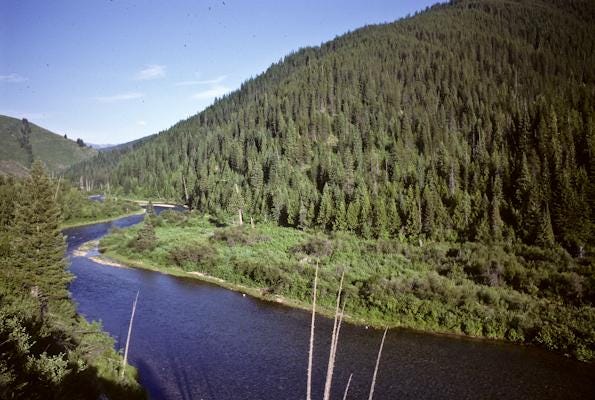
What can we say about the long terms impacts of fires on the West’s fisheries? Well, all you need to do is look back in time. Many of the West’s last strongholds for native fish and high-quality fish habitat are areas that burned extensively in the past. For example, the drainages of the Selway River, North Fork of the Clearwater, St. Joe River, Kelly Creek, and the Lochua River in Idaho were extensively burned in the 1910 blazes that charred more than 3.5 million acres of the Northern Rockies.
Today they are among the most famous trout streams in northern Idaho and known as refugia for native species like Westslope cutthroat that are endangered elsewhere.
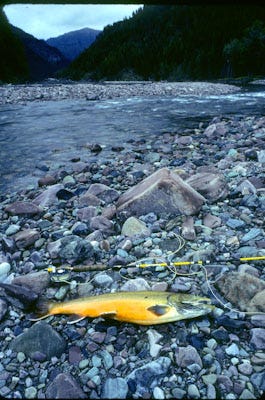
A similar conclusion could be made about the North and Middle Fork of the Flathead Rivers in Montana. Both drainages have burned extensively in the past, and today are among the last refuge and stronghold for bull trout and west slope cutthroat trout.
Research on fire ring history documents even larger fires in Yellowstone in the centuries past. Despite these large blazes, Yellowstone remains a premier fishery.
One of the key differences between the impacts associated with fires and those from other human activities like logging and livestock grazing is the temporal component. While a thunderstorm may send massive amounts of sediments from fire-denuded slopes into a stream, such events only occur for a short time after the blazes. Very shortly after a blaze, new plant growth stimulated by the fire-released nutrients and greater sunlight begins to take hold of slopes. This, combined with the down woody debris that acts as mini check dams, work to reduce sediment flow. As a result, fish populations can deal with a short-term impact on habitat quality and quickly recover from population declines.
The same thing can be said about fires and livestock impacts. Year after year, cattle trample streambanks, destroying bank structures and removing vegetation; At the same time, fires may temporarily upset the stream channel stability, but over the long term, it has a chance to stabilize and eventually improve as riparian vegetation regrows and channel structure is stabilized by the addition of wood, and more streamside vegetation.
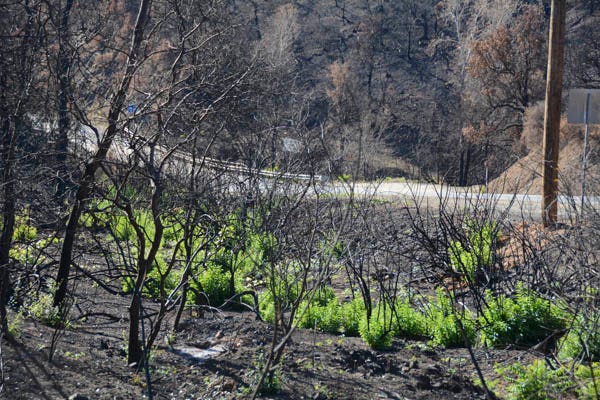
All the research suggests that the adverse effects of fires are localized and short-term, while the positive results appear to be long-term and more widely distributed in a watershed. Any regional effect of fires is dwarfed by the negative impacts of dewatering combined with drought. If there are any lessons we take away from the recent large wildfire, influences are well within the natural range of variation for aquatic ecosystems. Fish are well adapted for coping with these occasional blazes.
Great expose! Unfortunately, the Clearcut Cult (industry, agencies, Wildfire Industrial Complex, most media, some NGOs) have never let facts get in the way of their propaganda!